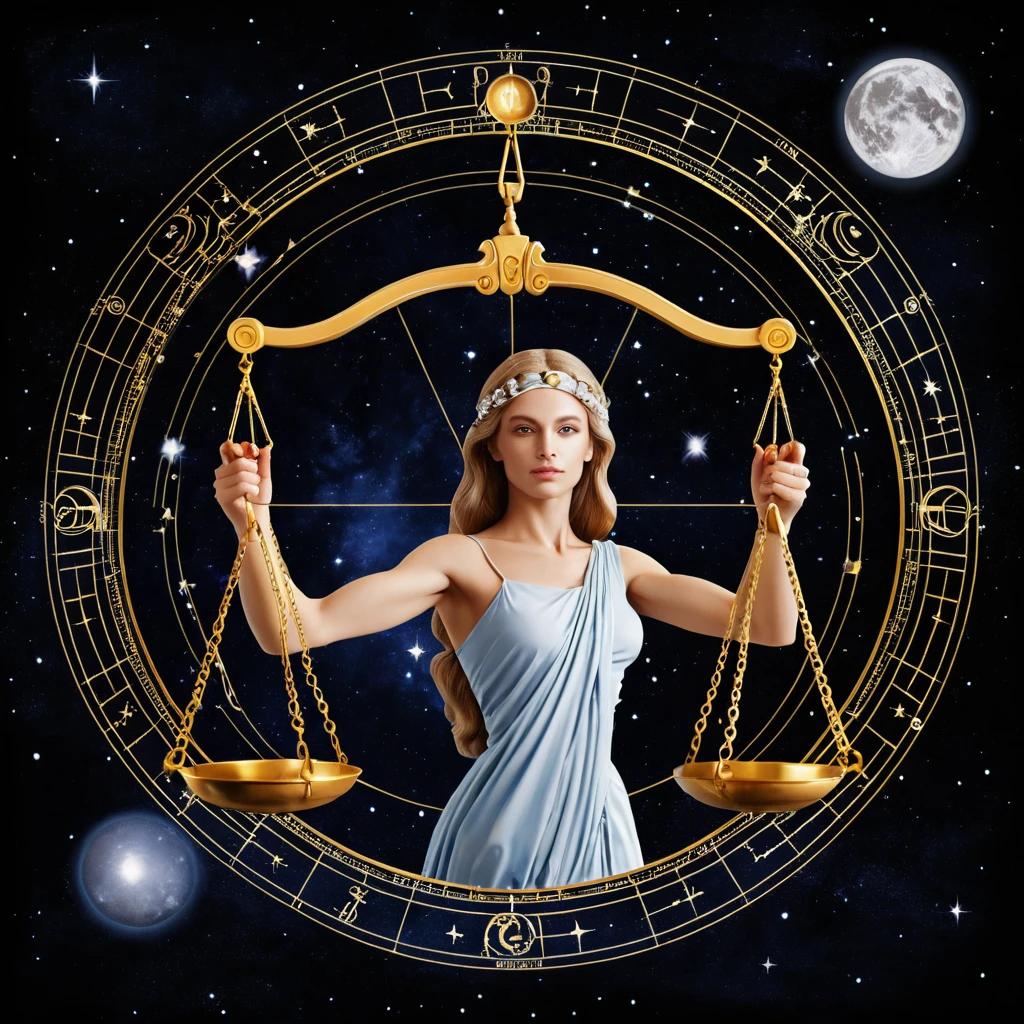
The autumn equinox has arrived. On September 22–23, 2026, the Sun crossed the threshold into Libra, marking the official start of Libra season and the moment when day and night stand in perfect balance across the globe. At the same time, the Moon travels through Aquarius in a waxing gibbous phase, Venus continues her deep dive through Scorpio, Mars prepares to leave Cancer for Leo, and four outer planets — Saturn, Uranus, Neptune, and Pluto — remain in retrograde motion. Against this rich celestial backdrop, artificial intelligence is no longer a novelty in the world of astrology. It has become a practical, precision tool that helps everyday people and professional astrologers alike interpret the current sky with unprecedented speed, accuracy, and personalization.
This is not the astrology of yesterday’s newspaper columns. This is real-time, data-driven cosmic guidance powered by algorithms that can process thousands of planetary positions, aspects, and natal chart overlays in seconds. In this post we explore exactly how AI is reshaping our relationship with the stars during one of the most relationally charged and intuitively fertile periods of 2026 — and how you can use these tools to navigate the energies of the coming weeks.
The Current Cosmic Weather: What the Sky Is Saying Right Now
Let’s ground ourselves in the actual sky of late September 2026.
The Sun has just entered Libra, the sign of partnership, fairness, beauty, and diplomacy. Libra season always invites us to examine the quality of our relationships — romantic, professional, and even the relationship we have with ourselves. Because the equinox occurs at 0° Libra, the theme of balance is especially strong. We are being asked to weigh our needs against the needs of others without losing our center.
The Moon is currently in Aquarius, the fixed air sign ruled by Uranus and associated with innovation, community, and future-oriented thinking. A waxing gibbous Moon in Aquarius heightens our desire for progressive ideas and collective solutions. Later on September 23 the Moon will slip into Pisces, softening the energy and opening the door to deeper intuition and emotional sensitivity. This shift from Aquarius to Pisces is subtle but powerful: we move from “what does the group need?” to “what does my soul need?”
Venus, the planet of love, values, and attraction, is traveling through Scorpio. This placement intensifies relationships. Surface-level connections feel unsatisfying; we crave emotional depth, honesty, and transformation. Venus in Scorpio does not do casual. She wants soul-level intimacy or nothing at all.
Mars remains in Cancer until approximately September 27–28, when it will enter Leo. While still in Cancer, Mars can feel protective, sometimes defensive, and highly focused on home, family, and emotional security. Once Mars enters Leo, the energy becomes more expressive, creative, and courageous. The final days of Mars in Cancer are therefore a good time to tend to unfinished emotional business before the spotlight energy of Leo arrives.
Jupiter continues its journey through Leo, expanding confidence, creativity, and the desire to be seen. Meanwhile, Saturn in Aries, Uranus in Gemini, Neptune in Aries, and Pluto in Aquarius are all retrograde. Retrograde periods of the outer planets invite review, integration, and course correction in the areas of life those planets rule — structure and responsibility (Saturn), innovation and freedom (Uranus), ideals and spirituality (Neptune), and deep systemic transformation (Pluto).
Looking ahead just a few days, the Full Moon in Aries on September 26 will illuminate themes of independence, initiative, and self-assertion. Because this Full Moon occurs while the Sun is still early in Libra, the classic tension between “me” and “we” will be highlighted. It is a perfect moment for AI-assisted chart analysis to show you exactly where that tension lands in your personal natal chart.
How AI Is Changing the Way We Read the Stars
Traditional astrology has always required significant skill: calculating planetary positions, understanding house systems, synthesizing aspects, and translating abstract symbolism into practical advice. AI does not replace the human astrologer’s intuition or wisdom, but it dramatically accelerates the technical work and democratizes access to sophisticated analysis.
Modern AI astrology platforms can:
- Generate a complete natal chart from birth data in under a second.
- Track current transits against that natal chart in real time.
- Highlight which of today’s planetary positions are most active for you personally.
- Offer written interpretations that adapt to your specific chart rather than generic sun-sign statements.
- Project upcoming transits weeks or months ahead and flag periods of heightened opportunity or challenge.
- Compare compatibility between two charts with nuanced, multi-layered analysis rather than simple sun-sign matching.
During a period as multi-layered as late September 2026 — with the Sun in Libra, Moon shifting from Aquarius to Pisces, Venus in Scorpio, and four outer-planet retrogrades — the volume of information is enormous. AI can filter that information so you receive only the transits that are currently most relevant to your personal chart.
Practical Applications for the Current Sky
1. Relationship Insights During Libra Season and Venus in Scorpio
Libra season + Venus in Scorpio is a potent combination for examining partnerships. AI tools can pull your seventh-house placements, Venus sign and aspects, and current transits to Venus and the Descendant, then generate a focused report on relationship patterns that are being activated right now. Instead of a vague “you may feel more romantic,” you receive specific guidance: “Your natal Venus in the 4th house is receiving a square from transiting Mars in Cancer, suggesting tension around domestic responsibilities in relationships. With Venus currently in Scorpio, conversations about emotional honesty are favored between September 23 and 30.”
2. Navigating the Aquarius-to-Pisces Moon Shift
The Moon’s move from Aquarius into Pisces on September 23–24 is brief but meaningful. AI can track lunar aspects in real time and alert you when the Moon makes exact aspects to your natal planets. For example, if the Moon in Aquarius forms a trine to your natal Mercury, the tool might suggest this is an excellent window for brainstorming or group communication. Once the Moon enters Pisces and aspects your natal Neptune or 12th-house planets, the same system can recommend quieter, more reflective activities.
3. Working with the Outer-Planet Retrogrades
Saturn, Uranus, Neptune, and Pluto retrograde periods can feel slow and frustrating when interpreted only generically. AI can show you the exact degree of each retrograde planet and how it interacts with your natal chart. If retrograde Saturn in Aries is currently square your natal Sun, the system can explain the developmental task involved and suggest practical steps for the coming months. This turns a potentially overwhelming transit into a manageable, purposeful process.
4. Preparing for the Aries Full Moon on September 26
A Full Moon is always a culmination. The Aries Full Moon opposite the Libra Sun highlights the need to balance self-assertion with cooperation. AI can generate a personalized Full Moon report that identifies which house the Full Moon falls in for you, which natal planets it aspects, and what themes are ready to be released or brought into the light. Many users find these reports more actionable than traditional sun-sign Full Moon horoscopes because they are calculated from the user’s actual birth chart.
The Human Element Remains Essential
While AI excels at calculation, pattern recognition, and rapid synthesis, astrology is ultimately a language of meaning. The best results occur when AI handles the technical heavy lifting and a human (whether a professional astrologer or an informed individual) provides context, ethical judgment, and emotional intelligence. AI can tell you that Mars is about to enter Leo and will conjoin your natal Midheaven; a skilled human can help you decide whether that transit is best used for a public launch, a creative project, or a period of intentional visibility.
There is also the question of data privacy and ethical use. Responsible AI astrology platforms are transparent about how birth data is stored and never claim to predict fixed outcomes. Astrology describes potentials and tendencies; free will and personal choice always remain.
Looking Ahead: What AI Astrology Makes Possible in the Coming Months
As we move deeper into Libra season and toward the Aries Full Moon, AI tools will continue to refine their ability to deliver timely, chart-specific guidance. Later in the autumn we will see Venus station retrograde in Scorpio (early October), adding another layer of relationship review. AI systems that can track both the current retrograde cycle and its impact on an individual’s natal Venus will offer a level of continuity that was previously available only through ongoing consultation with a professional astrologer.
Beyond individual charts, AI is beginning to analyze collective trends — correlating planetary cycles with social, economic, and cultural data. While this area is still developing, it points toward a future in which astrology and data science work side by side to help us understand larger patterns.
How to Begin Using AI Astrology Tools This Week
- Gather your exact birth data (date, time, and place). Accuracy matters.
- Choose a reputable AI-powered astrology platform that calculates tropical charts and offers transit tracking.
- Generate your natal chart and request a current transit report focused on September 22–30, 2026.
- Pay special attention to any transits involving your personal planets (Sun, Moon, Mercury, Venus, Mars) and the angles (Ascendant, Midheaven).
- Use the insights as prompts for reflection rather than rigid instructions. Journal, meditate, or discuss the themes with a trusted friend or counselor.
- Revisit the report after the Aries Full Moon to notice what has shifted.
Final Thoughts: Technology in Service of the Cosmos
We live in a rare moment when ancient sky lore and cutting-edge technology are learning to speak the same language. The current planetary configuration — Sun in Libra seeking balance, Moon moving from the collective vision of Aquarius into the emotional depths of Pisces, Venus demanding authenticity in Scorpio, and the outer planets reviewing their long-term lessons — offers a perfect laboratory for this collaboration.
AI does not diminish the mystery of the stars. It simply gives us clearer mirrors in which to see ourselves reflected. As Libra season unfolds and the Aries Full Moon approaches, the invitation is the same whether you consult the sky by eye, by ephemeris, or by algorithm: seek balance, honor both independence and connection, and allow the current cosmic weather to guide you toward greater self-awareness and more conscious relationships.
The stars have always been there. Now, for the first time, we have tools that can help every person on Earth read them with greater clarity — in real time, and in the language of their own unique chart. That is the quiet revolution happening this September 2026.
Leave a Reply